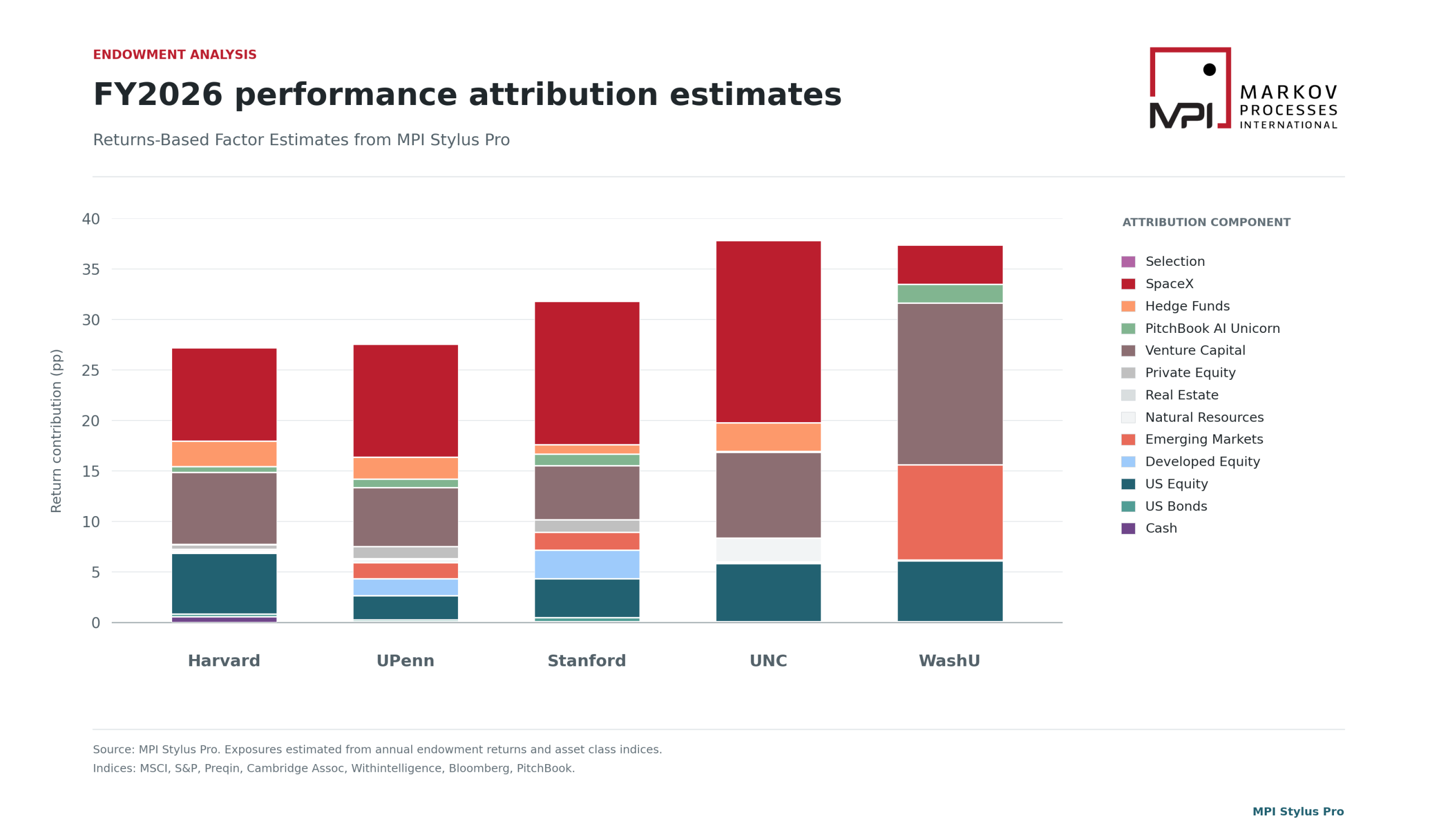
What risks lie behind WashU’s exceptional returns? MPI’s analysis offers valuable lessons for CIOs and endowment boards.
What risks lie behind WashU’s exceptional returns? MPI’s analysis offers valuable lessons for CIOs and endowment boards.
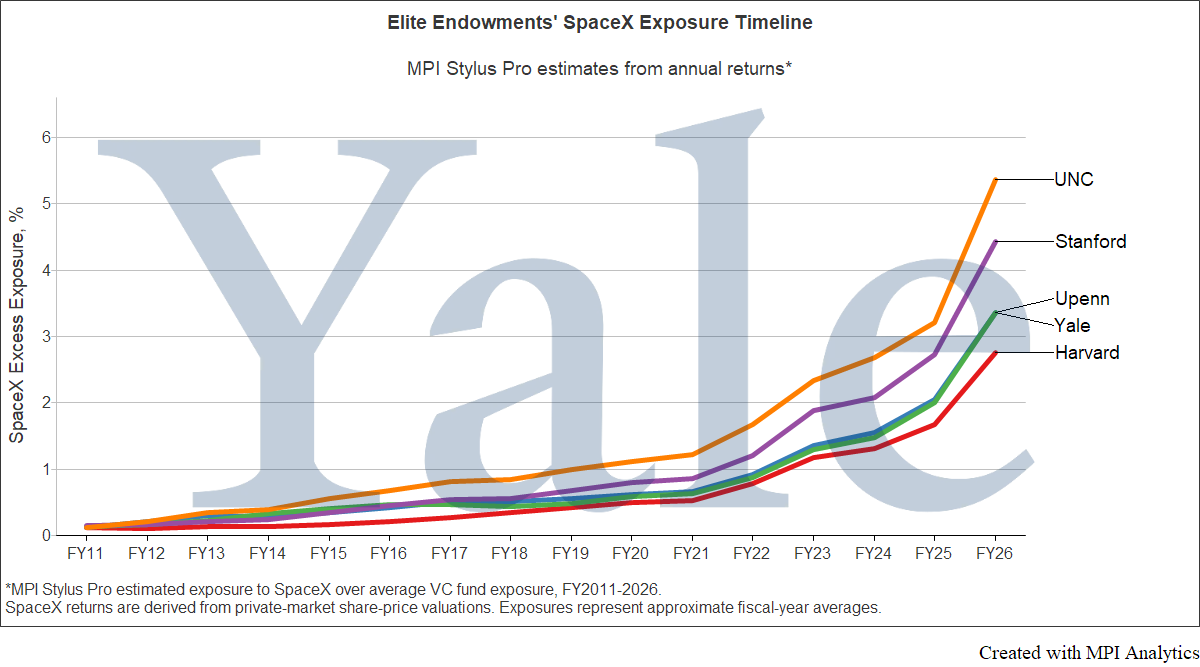
MPI estimates that SpaceX contributed nearly 40% of Yale’s FY26 investment gain, with hedge-fund ties offering clues to how Yale and Penn gained exposure.
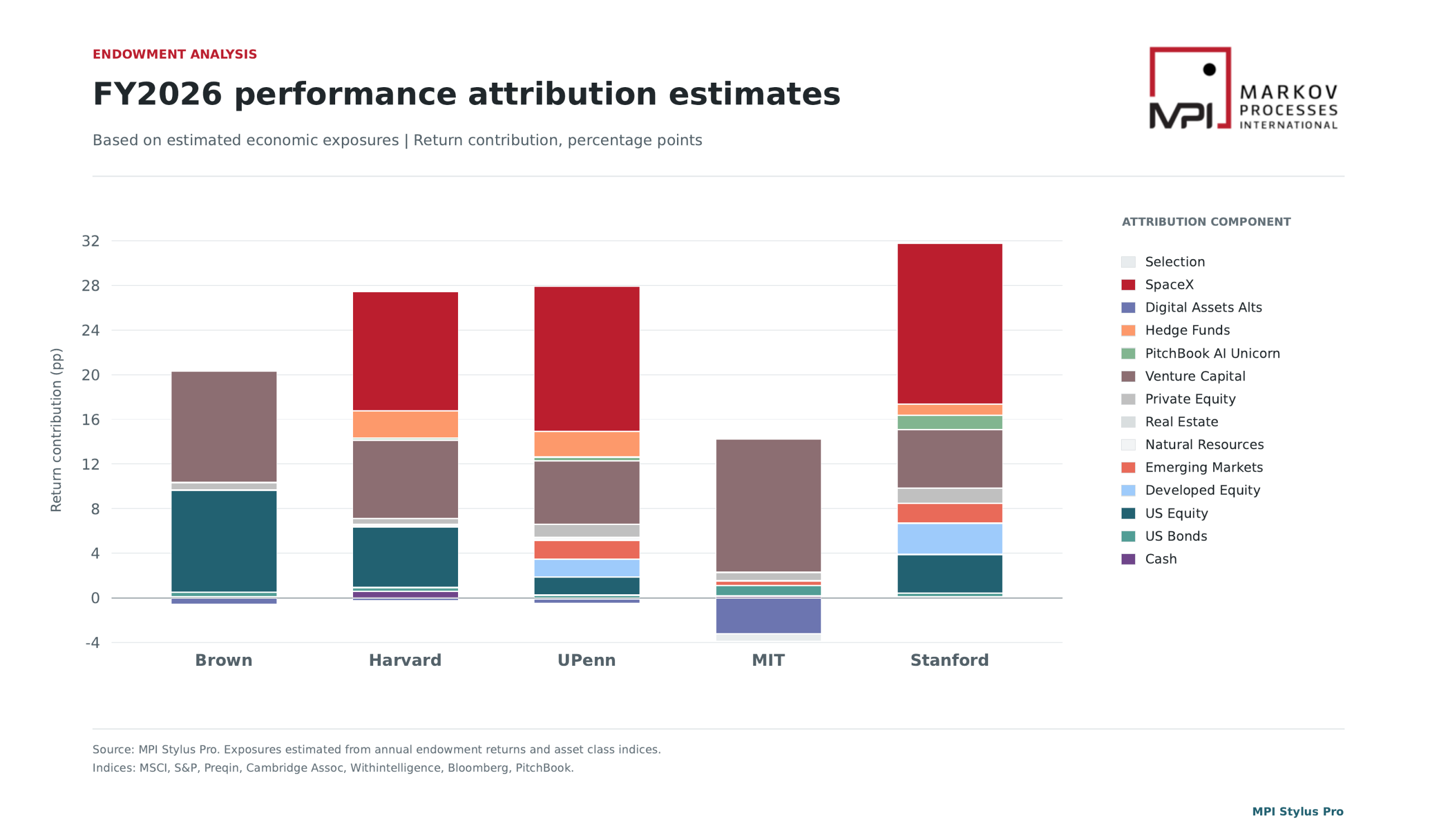
We compare Harvard with its peers and examine how concentration, long-term performance and portfolio risk change the picture of this year’s winners.
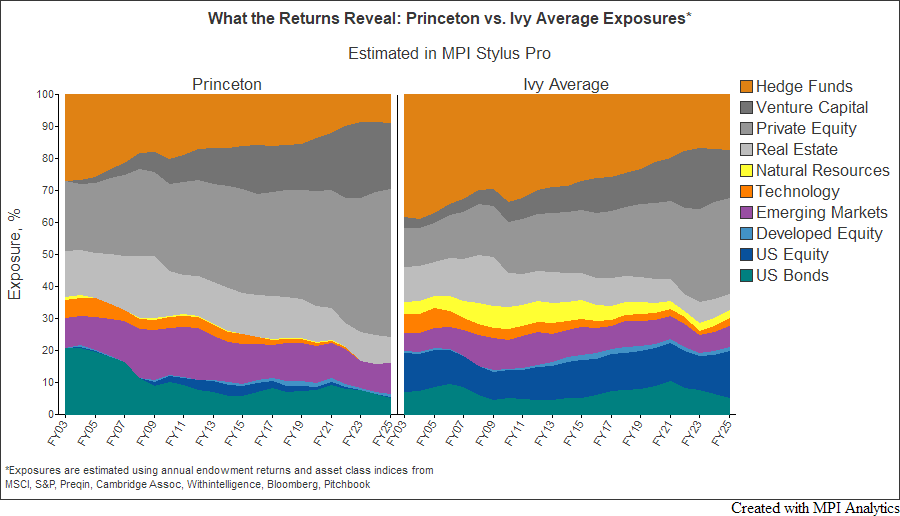
Princeton’s experience shows how hedges and changing exposures can reshape an alternative-heavy portfolio. MPI’s returns-based analysis highlights why asset owners need to look beyond allocation labels to total-portfolio behavior.
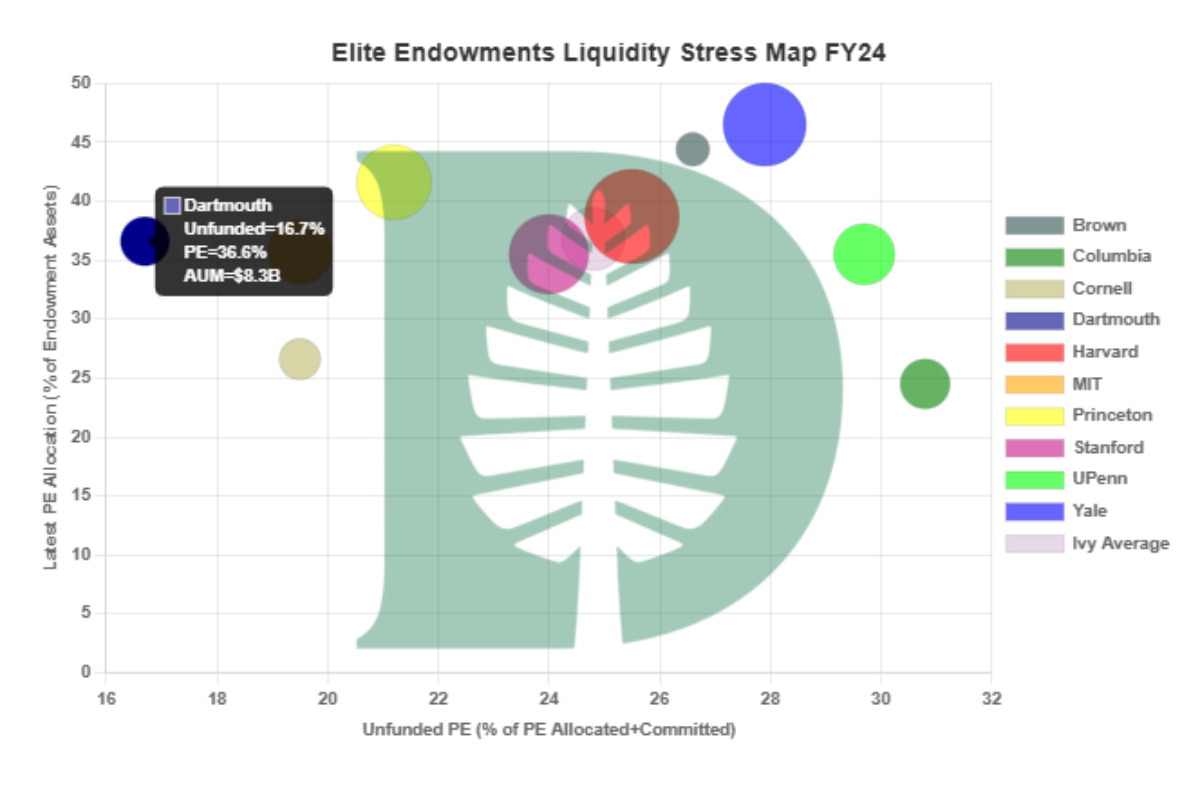
Our analysis shows how portfolio construction, pacing, and governance created a resilient “Switzerland” profile – and what others can emulate.
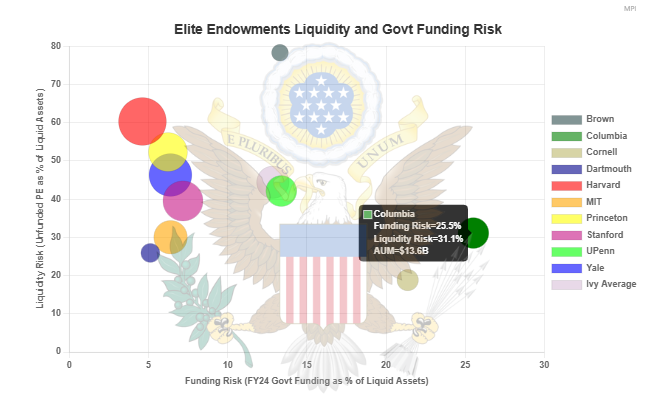
Federal funding cuts could impose significant financial strain on elite universities. One key factor in determining a university’s resilience to such funding disruptions is the liquidity of its endowment.
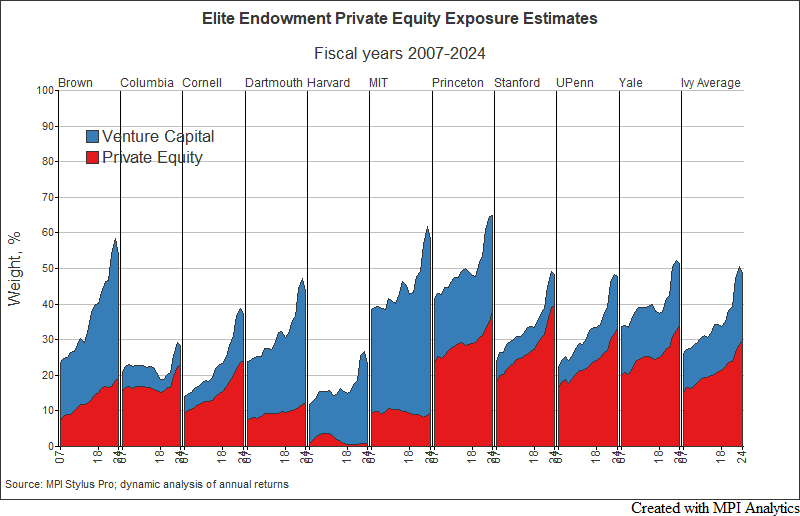
Ivy endowment Fiscal 2024 in review: risks; VC; long-term vs recent years; prospects of Yale Model.
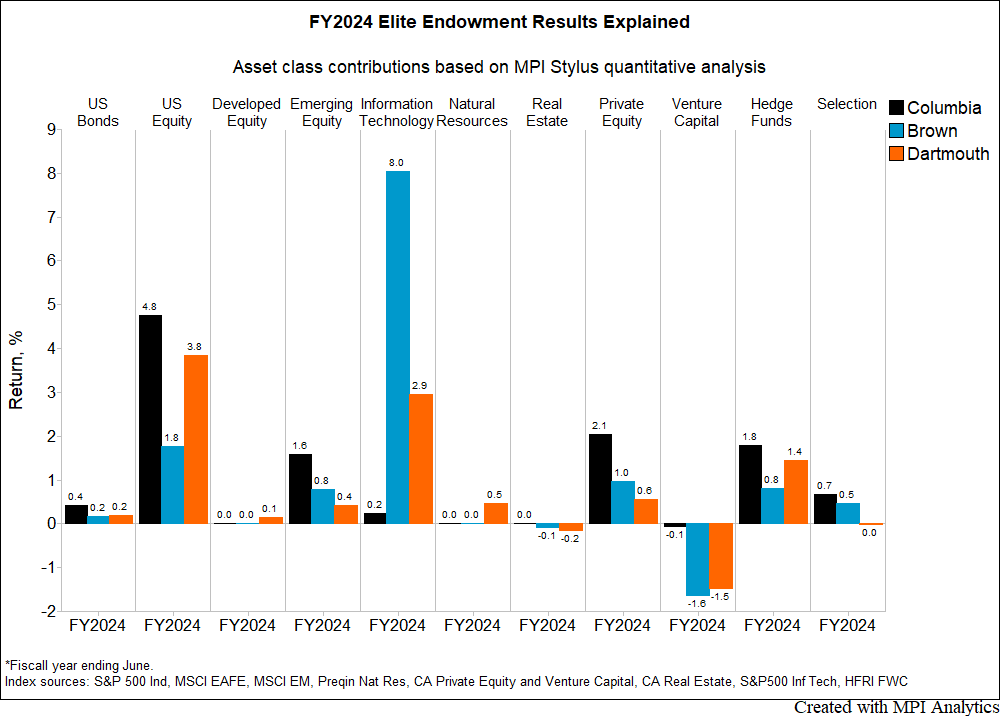
With Mag 7 stocks trouncing VC and Private Markets trailing in FY2024, Columbia and Brown lead Ivy endowments but with vastly different risk and exposures
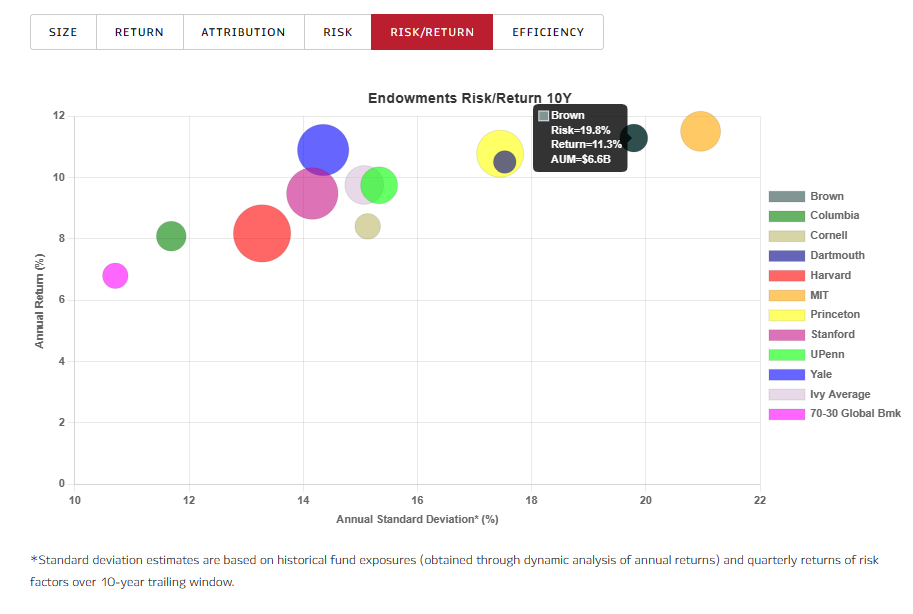
Ivy and elite endowments did poorly in fiscal year 2023, especially relative to a global 70/30 benchmark and smaller, less resourced endowments that invest in less private markets assets/funds than those employing the ‘Yale model’.
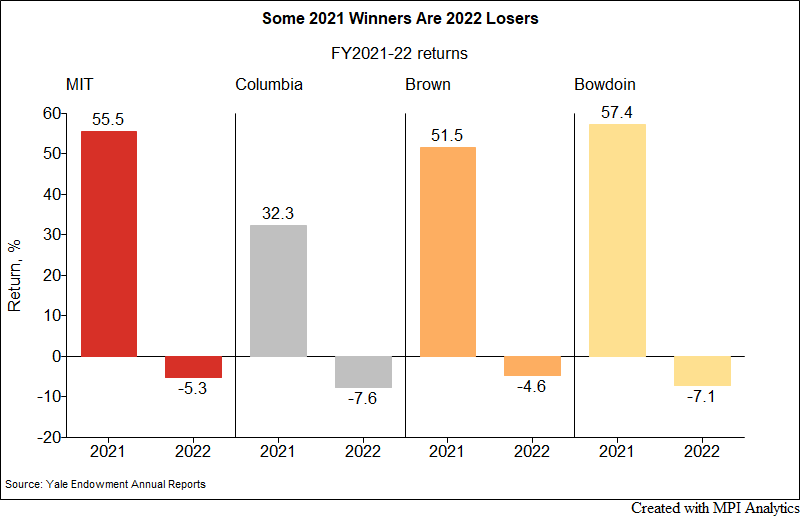
Most endowments have been propped up by a similar concentration in private assets. The ones that suffered the worst, however, couldn’t have been more different in their approach.