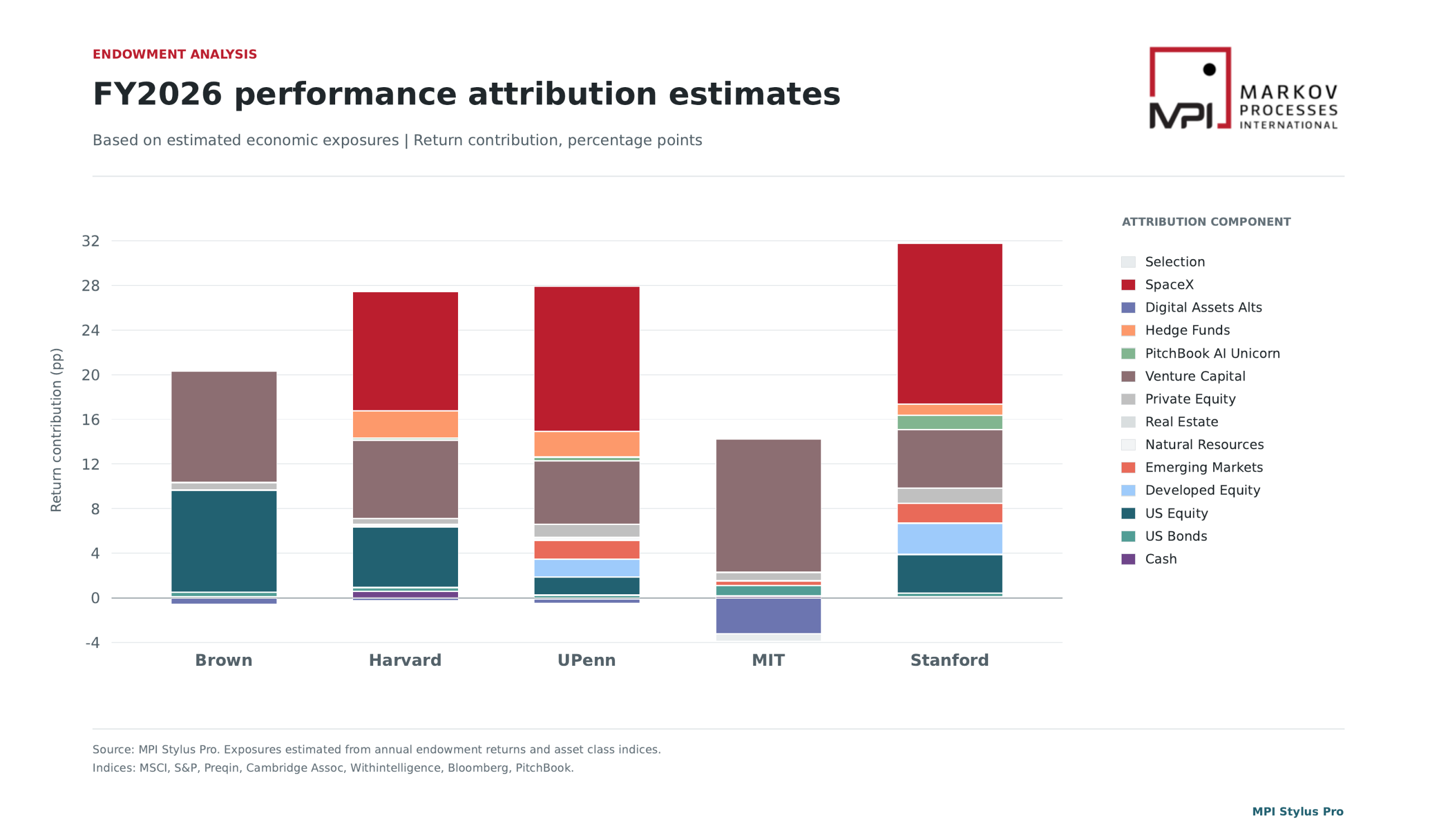
We compare Harvard with its peers and examine how concentration, long-term performance and portfolio risk change the picture of this year’s winners.
We compare Harvard with its peers and examine how concentration, long-term performance and portfolio risk change the picture of this year’s winners.
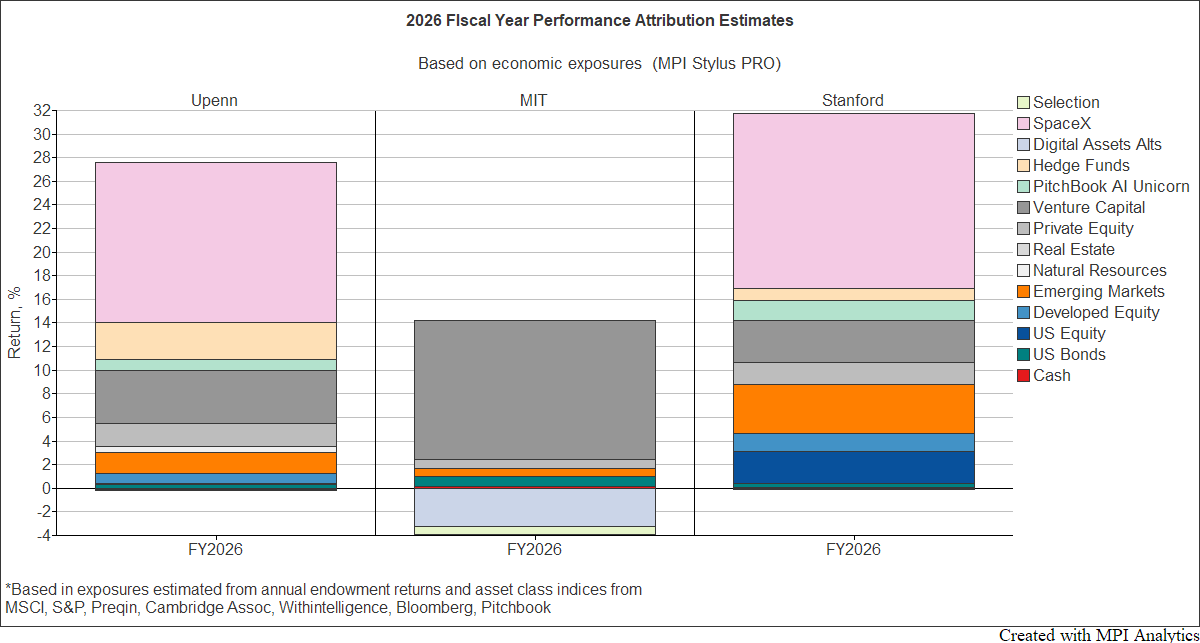
Penn, Stanford and MIT have reported sharply different FY26 returns. MPI examines the emerging endowment puzzle through the lens of economic exposures and portfolio risk.
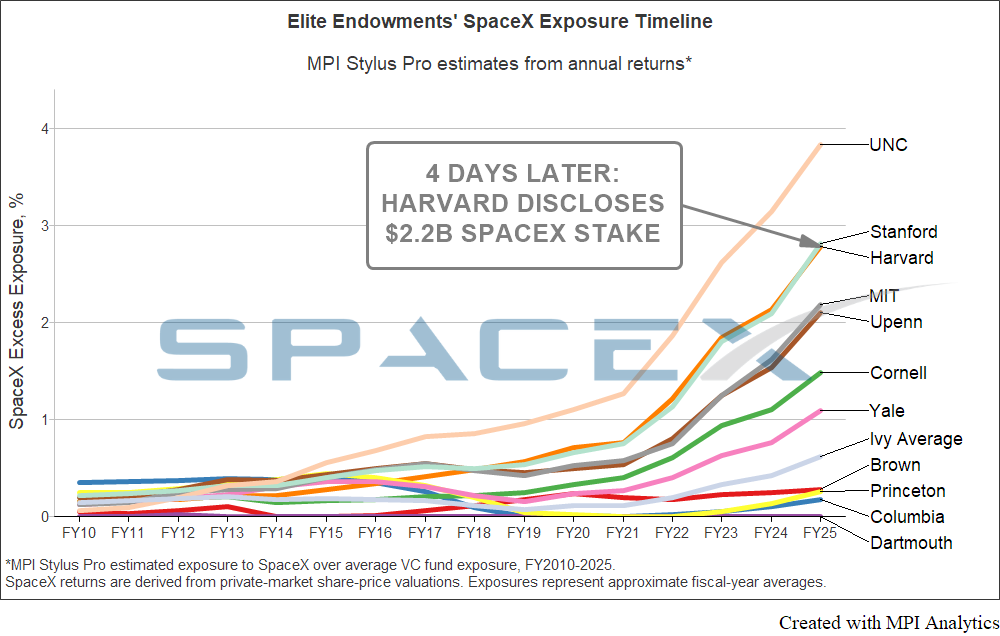
Can annual endowment returns reveal a concentrated private-market exposure before the underlying position becomes transparent? The recent SpaceX disclosures give us an unusual opportunity to test that question.
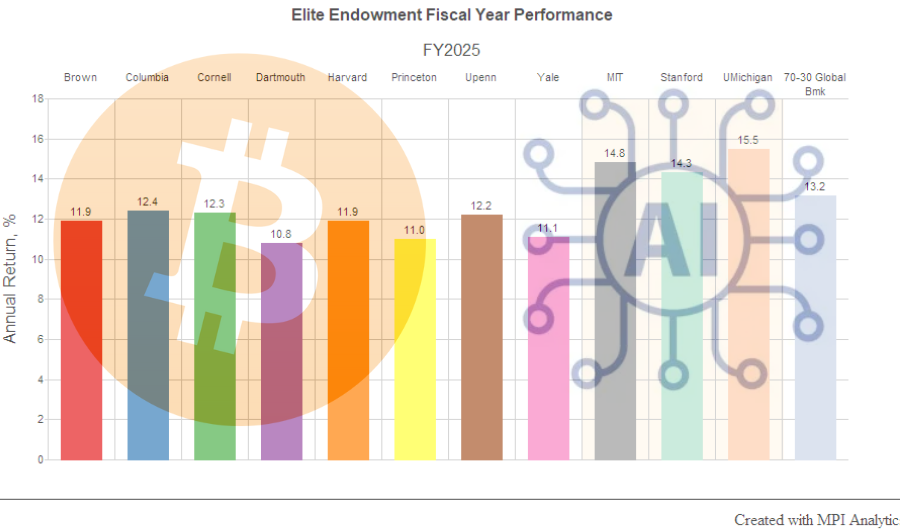
We analyze annual endowment returns to offer a plausible explanation for MIT, Stanford, and Michigan’s spectacular FY25 results. The evidence points to AI and digital-asset themes.
Using its proprietary Stylus Pro software, MPI shows that concentrated exposure to these areas is a plausible source of superior performance at Michigan, MIT and Stanford, among other schools.
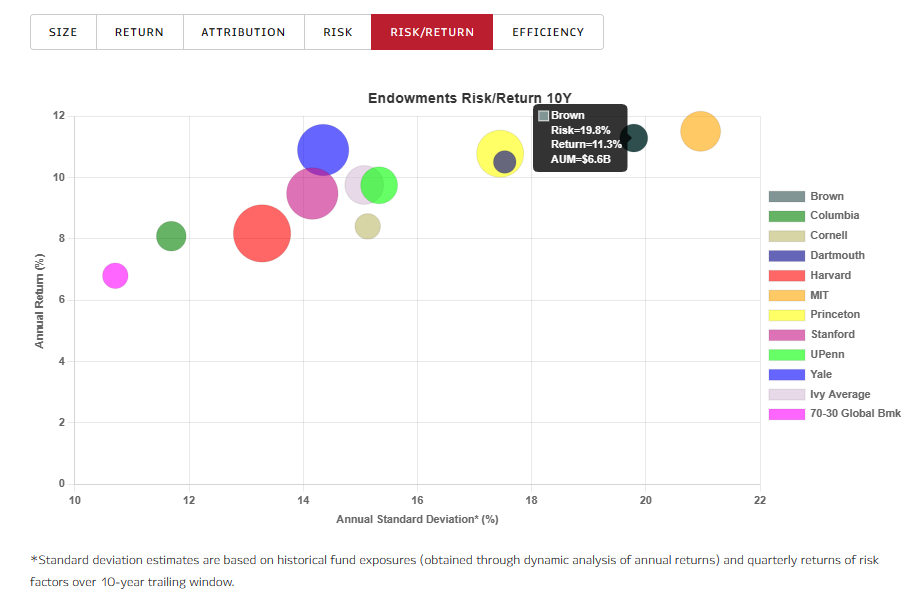
Ivy and elite endowments did poorly in fiscal year 2023, especially relative to a global 70/30 benchmark and smaller, less resourced endowments that invest in less private markets assets/funds than those employing the ‘Yale model’.
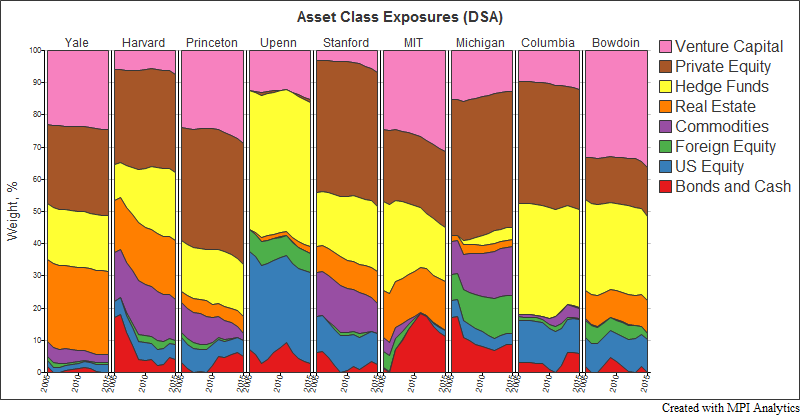
Using MPI’s Dynamic Style Analysis and public annual return disclosures we attempt to provide transparency on allocation decisions and performance results of some of the largest and most successful investors in the world.